
Turning Chicago’s Cultural Strength Into Economic Power | World Business Chicago

Chicago 2050

Chicago’s Advantage

NEWS

02.26.2026

Turning Chicago’s Cultural Strength Into Economic Power

Turning Chicago’s Cultural Strength Into Economic Power
  • Chicago has always been a city that creates.
  • A city that originates.
  • A city whose ideas, culture, architecture, and innovations don’t just shape neighborhoods — they shape the world.

From the first skyscraper to house music, from the city that lifted the 44th President to the global stage to the birthplace of the first American pope, Chicago is where world-changing ideas are born. It is where breakthroughs become movements, where art becomes diplomacy, where culture becomes economy.

Today, this legacy of creation is powering something new: Vibrancy as economic infrastructure.

Not an amenity. Not an add-on. But as a core economic driver — one that attracts investment, fuels job growth, strengthens the community, and defines Chicago’s global identity.

And now, for the first time, through an alliance of interests, we are quantifying, measuring, and strategically advancing vibrancy as a pillar of economic competitiveness.

In Chicago 2050 | A Plan for Economic Growth & Jobs, this work is formalized in Section 3.3 — Quality of Life & Promotion — which identifies vibrancy as one of the city’s most important strategies for long-term economic growth. Download the report to learn more.

Download Chicago 2050 | A Plan for Economic Growth & Jobs


Chicago 2050 makes the economic case clearly: Cities that win the next decade will be the cities where people want to live, visit, build, invest, create, and imagine. Vibrancy drives:

  • Business attraction: Companies locate where talent wants to live.
  • Tourism and visitor spend: Experiences fuel the city’s $16B+ tourism economy.
  • Neighborhood vitality: Cultural activation brings foot traffic, small business growth, and real estate reinvestment.
  • Talent retention: Young professionals choose cities with culture, arts, nightlife, food, and authenticity.
  • Global competitiveness: Vibrant cities punch above their weight in media, perception, and global appeal.

Chicago’s Vibrancy Advantage

Chicago has always produced culture—music, comedy, theater, architecture, food, festivals, and film. What’s new is how deliberately the city is organizing this strength into a growth platform:

  • A culinary ecosystem that attracts global attention (The Bear, Michelin stars, iconic local institutions)
  • A booming experiential and entertainment landscape
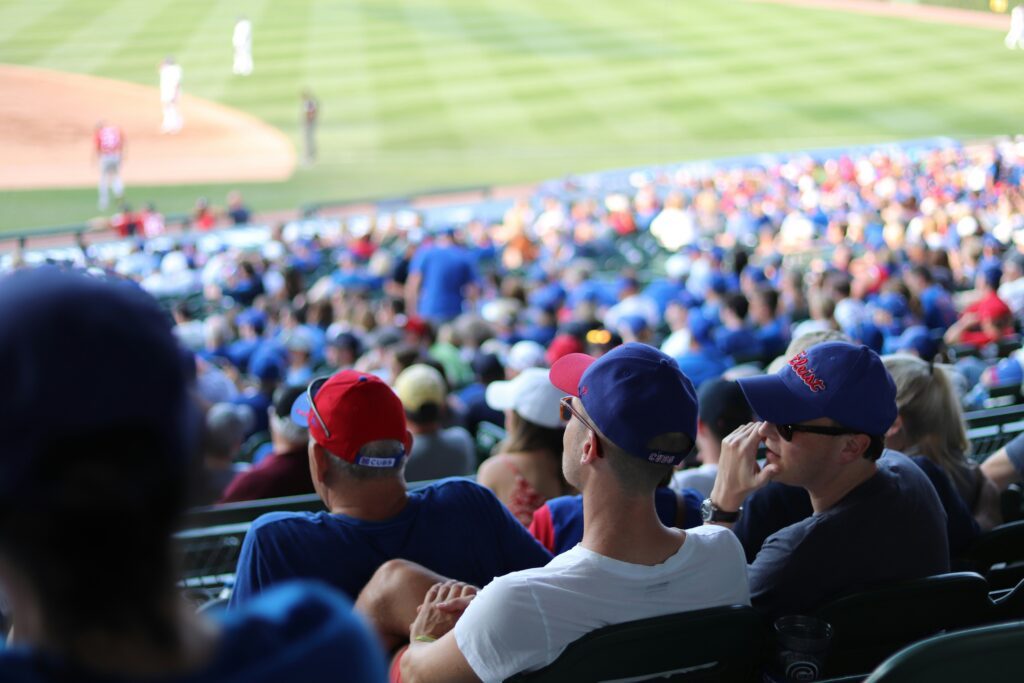
  • National leadership in festivals, from Lollapalooza to the Air & Water Show
  • A sports identity that resonates globally
  • Film and TV that serve as free advertising and tourism catalysts
  • Major cultural institutions reinventing space and programming for new audiences

New research confirms Chicago’s cultural energy is a measurable economic force.

The City of Chicago and Choose Chicagorecently led the first-ever economic research study of the independent live entertainment sector — and the findings make one thing clear: vibrancy is a major economic engine.

The study shows the sector generates more than $2.8 billion in annual economic output, supports nearly 17,000 jobs, and welcomes over 7.3 million fans each year. Those visitors drive an additional $383 million in off-site spending at neighborhood restaurants, hotels, and shops, contributing $1.8 billion to Illinois’ GDP and $185 million in state and local tax revenue.

These numbers reinforce why Chicago 2050 elevates vibrancy not as an amenity, but as a core strategy for economic growth, investment, and neighborhood vitality. Read more here.


Chicago is built to win in the immersive and experiential economy

The global immersive/experiential sector is projected to surpass $3.4 trillion by 2028—and Chicago is uniquely positioned to lead because our region combines the fundamentals that matter most:

  • The most diversified economy in the U.S., creating resilience and cross-sector demand.
  • One of the strongest talent pipelines in the nation, with 145,000+ annual graduates and deep workforce density.
  • Unmatched global connectivity through O’Hare—now the busiest airport in America—with the ORDNext modernization plan and the newly announced $1.3B Concourse D shaping the airport of the future.
  • A creative, multidisciplinary workforce powering culture, entertainment, media, design, architecture, and experiential development.
  • A legacy of place-making, innovation, and storytelling that fuels everything from film and food to sports, theater, and live events.

Vibrancy is Chicago’s next great economic engine — and its most authentic expression of who we are.

From the neighborhoods where jazz was born to the studios inventing the future of comedy, from the clubs where house music took over the world to the skyline that changed the planet, Chicago has never followed. It has always led. And it will lead again.

Vibrancy, arts, culture, hospitality, and experiential development are reshaping Chicago’s economy in profound ways — and future editions of WBC’s Business Pulse, powered by LinkedIn, will continue exploring this fast-growing sector.

If this work intrigues you and you’d like to dive deeper, connect with Carla M. Agostinelli, Director, Economic Development, who is leading WBC’s Vibrancy portfolio. Carla’s focus is advancing arts, culture, entertainment, hospitality, and experiential development as strategic drivers of Chicago’s economic growth and global competitiveness. DM Carla to get involved, collaborate, or learn more.

To see how the WBC Research Center defines Vibrancy, review below.


As part of Chicago 2050 and WBC’s broader economic strategy, the following definition helps clarify the full scope of industries, experiences, and systems that collectively create the vibrancy powering Chicago’s growth:

Vibrancy is the integrated set of industries that animate places, attract people, and support everyday life by combining cultural production, visitor activity, mobility, food, retail, and the design of the built environment. Together, these industries create lively, connected, and distinctive districts that drive economic activity, tourism, talent attraction, and quality of life.

Vibrancy includes:
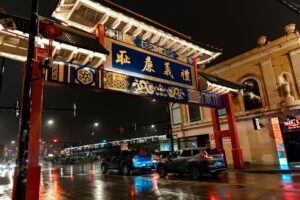
  • Tourism & Tourism-Supporting Industries– Industries that attract visitors and enable leisure, business travel, and destination experiences, supporting local spending, hospitality employment, and global visibility.
  • Transit & Passenger Transportation– Passenger mobility services that connect people to jobs, destinations, and experiences, enabling access, foot traffic, and the flow of activity across neighborhoods and regions.
  • Design & Planning Services– Professional services that shape the physical form, functionality, and aesthetics of places—guiding how buildings, public spaces, and streetscapes support human interaction and use.
  • Technical Design & Digital Creative Services– Digital and technology-enabled creative services that support content creation, interactive experiences, software, platforms, and data systems shaping modern cultural and consumer engagement. •
  • Marketing & Advertising– Industries that promote places, experiences, and products by shaping brand identity, audience reach, and demand for cultural, retail, and tourism assets.
  • Film, Television, Photography & Publishing– Content-creation industries that produce, distribute, and preserve media, storytelling, and information—contributing to cultural visibility, creative employment, and place identity.
  • Fine Arts & Performing Arts– Artists, performers, and institutions that generate cultural expression and live experiences, anchoring creative ecosystems and enhancing community character.
  • Sports, Entertainment & Recreation– Industries delivering spectator events, participatory recreation, and leisure attractions that draw visitors, activate districts, and generate consistent foot traffic.
  • Creative Goods & Fashion– Design-driven industries that produce, distribute, and sell creative and cultural goods—including apparel, fashion, furniture, décor, accessories, printed materials, musical instruments, and other consumer products—supporting local makers, supply chains, and experiential retail environments.
  • Food & Restaurants– Food and beverage production, dining, and drinking establishments that anchor social life, define neighborhood character, and generate high levels of employment and street activity.
  • Retail – Consumer retail establishments that provide everyday goods and services while contributing to walkability, convenience, and the density of activity within vibrant places.

Related News

Chicago 2050

Chicago’s Advantage

NEWS

02.26.2026

Global Traditions. Global Trade. Chicago at the Center.

Hundreds of millions of people around the world celebrate Lunar New Year — observed across China, Vietnam, South Korea, Singapore, Malaysia, Indonesia, the Philippines, Thailand, Mongolia, and beyon
View article

Chicago 2050

Chicago’s Advantage

Industries & Innovation

NEWS

WBC Research Center

02.26.2026

Nearly 5 Million Workers Position Chicagoland a Destination for Growth

Chicagoland’s economy is in a moment of profound transformation — and our greatest advantage in navigating it is our workforce. As outlined in Chicago 2050 | A Plan for Economic…
View article

Chicago 2050

NEWS

WBC Initiatives

02.26.2026

Chicago 2050 in action: a coordinated, regional strategy to attract and grow global investment.

Last week’s Business Pulse spotlighted Chicago 2050: A Plan for Economic Growth & Jobs, a roadmap grounded in a clear premise: our challenges will not be solved through contraction or…
View article

Business & Growth

Chicago 2050

NEWS

12.17.2025

Chicago 2050: A data-driven plan to grow jobs, investment, and confidence

What is Chicago 2050? Chicago 2050 is a two-phase plan for growth. Chapter One—the playbook unveiled this week—focuses on the next five years: where Chicago is strongest, where we can…

View article
Translate »