
Chicago’s Advantage
Industries & Innovation
WBC Research Center
10.30.2025
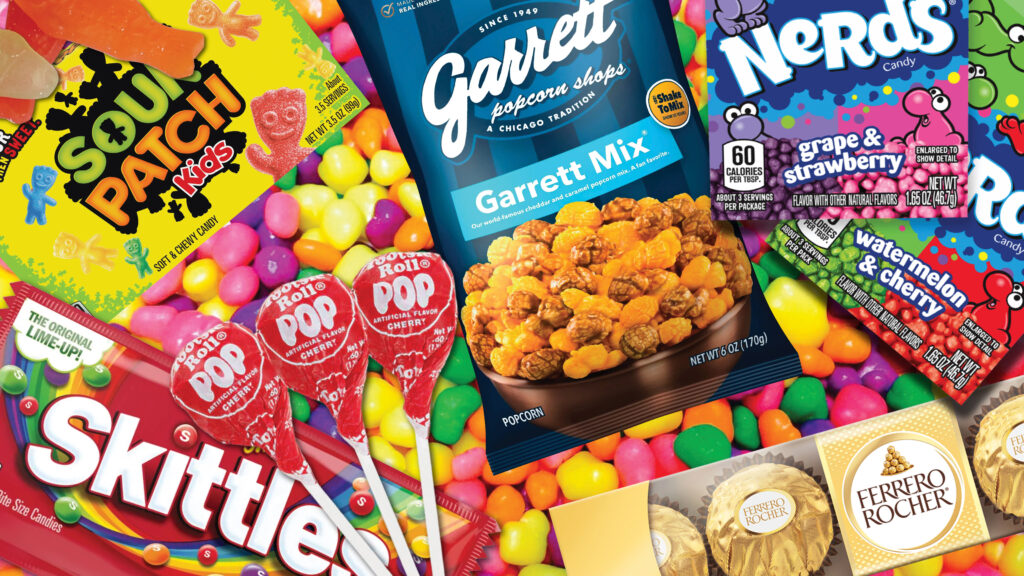
This Halloween, World Business Chicago is encouraging everyone to buy local and savor Chicago-made sweets. We were recently featured on CBS 2 Chicago, talking about why Chicagois the sweetest city in America.
And, to help you plan your trick-or-treating outing, Block Club Chicago has you covered with the official times for neighborhoods across the city — check them out here.

Ranked#1 in the nation, the Chicago region’s sugar and confectionery manufacturing industry has grown in recent years, with output increasing by $500 million between 2019 and 2024. Furthermore, Moody’s Analytics projects the industry will grow an additional 10.2% by 2027.
Similar to industry output, employment grew 17.8% to 7,853 between 2022 to 2024. The region’s industry is composed mostly of non-chocolate confectionary manufacturers.
The industry is dominated by production roles, which account for the majority of job opportunities in recent years. From January 2023 through September 2025, the most in-demand job titles based on unique postings are:
This pattern highlights the industry’s strong need for skilled production and technical talent to support continued output and operational efficiency.


Chicagoland’s sugar and confectionery manufacturing industry has always depended on its immigrant workforce, from pioneering founders to diverse teams who power production lines and warehouses. Immigrants have shaped the region’s reputation as America’s candy capital, especially through their vital roles in hands-on manufacturing and logistics. We see this in the fact that the top five zip codes for sugar and confectionery products manufacturing have anywhere from 7% to 32% of their resident populations foreign-born.

The industry is also diverse. As of 2025, the largest share of industry workers are of Hispanic or Latino descent (37.2%), closely followed by White (36.9%) and Black or African American employees (20.8%), with other groups (5.1%). This rich mix of backgrounds continues to fuel Chicagoland’s leadership amongst other major metro areas.
The Research Center at World Business Chicago often looks at consumer psychographic metrics that reveal how people think, what they value, and their purchasing and consumption habits—including their food choices.
What began as small operations started by immigrant entrepreneurs blossomed into an industry that shaped local and global tastes by the mid-20th century. Today, Chicago’s world-renowned candy companies, mentioned below, continue to define innovation and excellence in sweets.
This enduring legacy not only strengthens Chicago’s economic fabric but also ensures its status as a premier destination for candy excellence well into the future.
So, this Halloween and beyond, choose Chicago-made treats and celebrate the people who keep our region’s sweetest legacy alive. Because when you buy local, you’re not just satisfying your sweet tooth — you’re investing in Chicago’s future.

When you head to the store for that last-minute Halloween candy run, choose local. Every purchase supports our neighbors, our locally based and headquartered companies, and the communities that make Chicagoland the sweetest place in America.
Chicago 2050
Chicago’s Advantage
NEWS
02.26.2026
Hundreds of millions of people around the world celebrate Lunar New Year — observed across China, Vietnam, South Korea, Singapore, Malaysia, Indonesia, the Philippines, Thailand, Mongolia, and beyon

Chicago’s Advantage
Industries & Innovation
NEWS
02.26.2026
Data centers have emerged as one of the most consequential infrastructure investments of the twenty-first century. The global data center market was estimated at approximately $387 billion in 2025, wi
Chicago 2050
Chicago’s Advantage
Industries & Innovation
NEWS
WBC Research Center
02.26.2026
Chicagoland’s economy is in a moment of profound transformation — and our greatest advantage in navigating it is our workforce. As outlined in Chicago 2050 | A Plan for Economic…

Chicago 2050
Chicago’s Advantage
NEWS
02.26.2026
Chicago has always been a city that creates. A city that originates. A city whose ideas, culture, architecture, and innovations don’t just shape neighborhoods — they shape the world. From…